
PT CCCEI Executes Indonesia's First High-Capacity Shiploader EPC Project in East Kutai, East Kalimantan
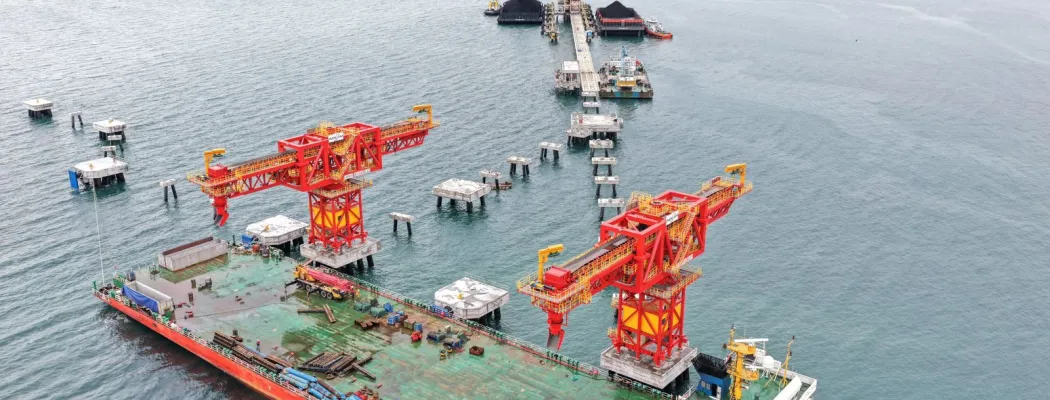
PT China Communications Construction Engineering Indonesia (PT CCCEI) has officially commenced the Shiploader 6,000 TPH EPC Project located in East Kutai, East Kalimantan Province. This project marks a significant milestone for the company as it represents the first EPC shiploader project in Indonesia with a loading capacity of 6,000 tons per hour, reflecting PT CCCEI’s strong capability in delivering large-scale and technically complex marine infrastructure.
The project is developed for PT Unggul Abadi Infrastruktur, a subsidiary of PT Indexim Coalindo, and is currently under construction. The scope of work includes the development of a new offshore coal jetty designed to accommodate vessels of up to 100,000 DWT, along with the installation of bulk material handling systems capable of supporting high-capacity coal export operations. The facility is designed to improve loading efficiency through the use of tripper radial conveyors and shiploaders for direct loading to Panamax-type vessels.
A key technical highlight of the project is the shiploader installation methodology. The shiploader equipment is installed using a whole-equipment installation method, whereby the main shiploader structure is delivered and installed as a largely pre-assembled integrated unit rather than being assembled piece by piece on site. This approach demands high-precision engineering, heavy lifting capability, and careful coordination of marine and construction operations, while significantly reducing on-site assembly time, construction risks, and interface complexity. The successful application of this method demonstrates PT CCCEI’s advanced expertise in executing high-capacity material handling systems.
As part of the project, PT CCCEI is also constructing a steel trestle exceeding 440 meters in length, connecting the offshore jetty to the existing land-based conveyor system. This includes the installation of an elevated belt conveyor and integration with an existing jetty structure, requiring precise coordination between marine piling works, heavy structural construction, and mechanical installation activities.
Located in a remote coastal area of East Kalimantan, the project presents considerable logistical and environmental challenges. Limited public infrastructure, long-distance transportation of materials and equipment, and demanding marine construction conditions require meticulous planning and execution. In addition, all works are carried out in compliance with strict environmental management requirements, with careful consideration of tidal conditions and coastal geotechnical characteristics.
The Shiploader 6,000 TPH EPC Project plays an important role in supporting Indexim Coalindo’s long-term production and export strategy by enhancing shiploading capacity and upgrading marine export infrastructure. The additional capacity is expected to improve vessel turnaround time, increase operational efficiency, and provide greater flexibility in handling large-capacity vessels, contributing to a more reliable and cost-effective supply chain.
Through this project, PT CCCEI continues to strengthen its position as a trusted infrastructure contractor in Indonesia. With extensive experience in marine construction and integrated EPC delivery, the company remains committed to supporting the development of strategic infrastructure, particularly in ports, logistics, and industrial facilities. PT CCCEI will continue to contribute to Indonesia’s sustainable economic growth by delivering high-quality projects that meet international standards of safety, performance, and environmental responsibility.
The project is developed for PT Unggul Abadi Infrastruktur, a subsidiary of PT Indexim Coalindo, and is currently under construction. The scope of work includes the development of a new offshore coal jetty designed to accommodate vessels of up to 100,000 DWT, along with the installation of bulk material handling systems capable of supporting high-capacity coal export operations. The facility is designed to improve loading efficiency through the use of tripper radial conveyors and shiploaders for direct loading to Panamax-type vessels.
A key technical highlight of the project is the shiploader installation methodology. The shiploader equipment is installed using a whole-equipment installation method, whereby the main shiploader structure is delivered and installed as a largely pre-assembled integrated unit rather than being assembled piece by piece on site. This approach demands high-precision engineering, heavy lifting capability, and careful coordination of marine and construction operations, while significantly reducing on-site assembly time, construction risks, and interface complexity. The successful application of this method demonstrates PT CCCEI’s advanced expertise in executing high-capacity material handling systems.
As part of the project, PT CCCEI is also constructing a steel trestle exceeding 440 meters in length, connecting the offshore jetty to the existing land-based conveyor system. This includes the installation of an elevated belt conveyor and integration with an existing jetty structure, requiring precise coordination between marine piling works, heavy structural construction, and mechanical installation activities.
Located in a remote coastal area of East Kalimantan, the project presents considerable logistical and environmental challenges. Limited public infrastructure, long-distance transportation of materials and equipment, and demanding marine construction conditions require meticulous planning and execution. In addition, all works are carried out in compliance with strict environmental management requirements, with careful consideration of tidal conditions and coastal geotechnical characteristics.
The Shiploader 6,000 TPH EPC Project plays an important role in supporting Indexim Coalindo’s long-term production and export strategy by enhancing shiploading capacity and upgrading marine export infrastructure. The additional capacity is expected to improve vessel turnaround time, increase operational efficiency, and provide greater flexibility in handling large-capacity vessels, contributing to a more reliable and cost-effective supply chain.
Through this project, PT CCCEI continues to strengthen its position as a trusted infrastructure contractor in Indonesia. With extensive experience in marine construction and integrated EPC delivery, the company remains committed to supporting the development of strategic infrastructure, particularly in ports, logistics, and industrial facilities. PT CCCEI will continue to contribute to Indonesia’s sustainable economic growth by delivering high-quality projects that meet international standards of safety, performance, and environmental responsibility.


LATEST News
PT China Communications Construction Engineering Indonesia (PT CCCEI) has officially commenced the Shiploader 6,000 TPH EPC Project located in East Kutai, East Kalimantan Province. This project marks a significant milestone for the company as it represents the first EPC shiploader project in Indonesia with a loading capacity of 6,000 tons per hour, reflecting PT CCCEI’s strong capability in delivering large-scale and technically complex marine infrastructure.
The project is developed for PT Unggul Abadi Infrastruktur, a subsidiary of PT Indexim Coalindo, and is currently under construction. The scope of work includes the development of a new offshore coal jetty designed to accommodate vessels of up to 100,000 DWT, along with the installation of bulk material handling systems capable of supporting high-capacity coal export operations. The facility is designed to improve loading efficiency through the use of tripper radial conveyors and shiploaders for direct loading to Panamax-type vessels.
A key technical highlight of the project is the shiploader installation methodology. The shiploader equipment is installed using a whole-equipment installation method, whereby the main shiploader structure is delivered and installed as a largely pre-assembled integrated unit rather than being assembled piece by piece on site. This approach demands high-precision engineering, heavy lifting capability, and careful coordination of marine and construction operations, while significantly reducing on-site assembly time, construction risks, and interface complexity. The successful application of this method demonstrates PT CCCEI’s advanced expertise in executing high-capacity material handling systems.
As part of the project, PT CCCEI is also constructing a steel trestle exceeding 440 meters in length, connecting the offshore jetty to the existing land-based conveyor system. This includes the installation of an elevated belt conveyor and integration with an existing jetty structure, requiring precise coordination between marine piling works, heavy structural construction, and mechanical installation activities.
Located in a remote coastal area of East Kalimantan, the project presents considerable logistical and environmental challenges. Limited public infrastructure, long-distance transportation of materials and equipment, and demanding marine construction conditions require meticulous planning and execution. In addition, all works are carried out in compliance with strict environmental management requirements, with careful consideration of tidal conditions and coastal geotechnical characteristics.
The Shiploader 6,000 TPH EPC Project plays an important role in supporting Indexim Coalindo’s long-term production and export strategy by enhancing shiploading capacity and upgrading marine export infrastructure. The additional capacity is expected to improve vessel turnaround time, increase operational efficiency, and provide greater flexibility in handling large-capacity vessels, contributing to a more reliable and cost-effective supply chain.
Through this project, PT CCCEI continues to strengthen its position as a trusted infrastructure contractor in Indonesia. With extensive experience in marine construction and integrated EPC delivery, the company remains committed to supporting the development of strategic infrastructure, particularly in ports, logistics, and industrial facilities. PT CCCEI will continue to contribute to Indonesia’s sustainable economic growth by delivering high-quality projects that meet international standards of safety, performance, and environmental responsibility.
The project is developed for PT Unggul Abadi Infrastruktur, a subsidiary of PT Indexim Coalindo, and is currently under construction. The scope of work includes the development of a new offshore coal jetty designed to accommodate vessels of up to 100,000 DWT, along with the installation of bulk material handling systems capable of supporting high-capacity coal export operations. The facility is designed to improve loading efficiency through the use of tripper radial conveyors and shiploaders for direct loading to Panamax-type vessels.
A key technical highlight of the project is the shiploader installation methodology. The shiploader equipment is installed using a whole-equipment installation method, whereby the main shiploader structure is delivered and installed as a largely pre-assembled integrated unit rather than being assembled piece by piece on site. This approach demands high-precision engineering, heavy lifting capability, and careful coordination of marine and construction operations, while significantly reducing on-site assembly time, construction risks, and interface complexity. The successful application of this method demonstrates PT CCCEI’s advanced expertise in executing high-capacity material handling systems.
As part of the project, PT CCCEI is also constructing a steel trestle exceeding 440 meters in length, connecting the offshore jetty to the existing land-based conveyor system. This includes the installation of an elevated belt conveyor and integration with an existing jetty structure, requiring precise coordination between marine piling works, heavy structural construction, and mechanical installation activities.
Located in a remote coastal area of East Kalimantan, the project presents considerable logistical and environmental challenges. Limited public infrastructure, long-distance transportation of materials and equipment, and demanding marine construction conditions require meticulous planning and execution. In addition, all works are carried out in compliance with strict environmental management requirements, with careful consideration of tidal conditions and coastal geotechnical characteristics.
The Shiploader 6,000 TPH EPC Project plays an important role in supporting Indexim Coalindo’s long-term production and export strategy by enhancing shiploading capacity and upgrading marine export infrastructure. The additional capacity is expected to improve vessel turnaround time, increase operational efficiency, and provide greater flexibility in handling large-capacity vessels, contributing to a more reliable and cost-effective supply chain.
Through this project, PT CCCEI continues to strengthen its position as a trusted infrastructure contractor in Indonesia. With extensive experience in marine construction and integrated EPC delivery, the company remains committed to supporting the development of strategic infrastructure, particularly in ports, logistics, and industrial facilities. PT CCCEI will continue to contribute to Indonesia’s sustainable economic growth by delivering high-quality projects that meet international standards of safety, performance, and environmental responsibility.
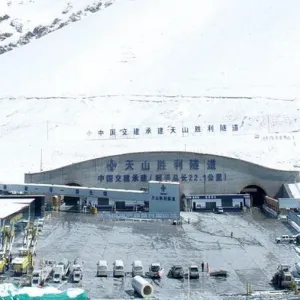
Jakarta, CNBC Indonesia - The 22.13-kilometer Tianshan Shengli Toll Road Tunnel, touted as the world's longest toll road tunnel, officially opened to traffic on Friday (December 26, 2025) local time.
The tunnel, which traverses the central Tianshan Mountains in the Xinjiang Uygur Autonomous Region in northwest China, cuts travel time from several hours to just 20 minutes.
As a major route connecting city clusters in northern and southern Xinjiang, the G0711 Urumqi-Yuli Toll Road, including the tunnel, officially began operations on the same day.
Through the existing toll road network, this new route connects the Beijing-Tianjin-Hebei region, the Yangtze River Delta, the Guangdong-Hong Kong-Macao Greater Bay Area, and the Chengdu-Chongqing region, thus becoming a major hub connecting China's eastern economic belt with countries in the Eurasian region.
"This is an all-weather transportation corridor with high efficiency and large capacity that will significantly enhance the resilience and security of national energy resources and agricultural supply chains," said Huang Tao, Deputy Head of the Transportation Bureau of Bayingolin Mongolian Autonomous Prefecture, as quoted by chinadaily.com, Friday (December 26, 2025).
As is known, the Tianshan Mountains stretch for approximately 2,500 kilometers in central Xinjiang, separating Urumqi, the largest city in the north, from Korla, the largest city in the south.
The opening of this expressway will reduce travel time between the two major cities from approximately seven hours to approximately three hours, promoting economic integration between northern and southern Xinjiang and opening a new channel for external exchanges.
"Previously, shipping raw materials from northern Xinjiang to Yuli took three to four days, but now it can be done in one to two days," said Tao Feng, Manager of Yuli Lihua Textile Co., Ltd., adding that the company's transportation costs and time will be significantly reduced.
This toll road was built over five years, with a total length of 324.7 kilometers and an investment value of 46.7 billion yuan (approximately US.63 billion).
"Road construction in the Tianshan Mountains faces extreme challenges at every stage," said Zhou Zheng, project General Manager of China Communications Construction Company.
He explained that the complex terrain along the route includes an 11-kilometer segment featuring 14 bridges and five tunnels, resulting in a bridge-to-tunnel ratio exceeding 90 percent.
The tunnel construction faced world-class challenges due to the project's massive scale. The tunnel is 22.13 kilometers long with a maximum depth of 1,112.2 meters.
The tunnel traverses 16 geological fault zones and faces five major challenges: high earth pressure, strong seismic intensity, stringent environmental requirements, extreme temperatures, and high-altitude conditions.
To address these challenges, Chinese engineers implemented a number of innovative solutions, including constructing environmentally friendly access roads to minimize ecological disruption while increasing material transport efficiency.
They also adopted a construction method that cut the construction time of the main tunnel by more than a quarter and deployed the world's first high-pressure hard rock tunnel boring machine, developed independently by China, to address various inefficiencies in hard rock excavation.
The tunnel, which traverses the central Tianshan Mountains in the Xinjiang Uygur Autonomous Region in northwest China, cuts travel time from several hours to just 20 minutes.
As a major route connecting city clusters in northern and southern Xinjiang, the G0711 Urumqi-Yuli Toll Road, including the tunnel, officially began operations on the same day.
Through the existing toll road network, this new route connects the Beijing-Tianjin-Hebei region, the Yangtze River Delta, the Guangdong-Hong Kong-Macao Greater Bay Area, and the Chengdu-Chongqing region, thus becoming a major hub connecting China's eastern economic belt with countries in the Eurasian region.
"This is an all-weather transportation corridor with high efficiency and large capacity that will significantly enhance the resilience and security of national energy resources and agricultural supply chains," said Huang Tao, Deputy Head of the Transportation Bureau of Bayingolin Mongolian Autonomous Prefecture, as quoted by chinadaily.com, Friday (December 26, 2025).
As is known, the Tianshan Mountains stretch for approximately 2,500 kilometers in central Xinjiang, separating Urumqi, the largest city in the north, from Korla, the largest city in the south.
The opening of this expressway will reduce travel time between the two major cities from approximately seven hours to approximately three hours, promoting economic integration between northern and southern Xinjiang and opening a new channel for external exchanges.
"Previously, shipping raw materials from northern Xinjiang to Yuli took three to four days, but now it can be done in one to two days," said Tao Feng, Manager of Yuli Lihua Textile Co., Ltd., adding that the company's transportation costs and time will be significantly reduced.
This toll road was built over five years, with a total length of 324.7 kilometers and an investment value of 46.7 billion yuan (approximately US.63 billion).
"Road construction in the Tianshan Mountains faces extreme challenges at every stage," said Zhou Zheng, project General Manager of China Communications Construction Company.
He explained that the complex terrain along the route includes an 11-kilometer segment featuring 14 bridges and five tunnels, resulting in a bridge-to-tunnel ratio exceeding 90 percent.
The tunnel construction faced world-class challenges due to the project's massive scale. The tunnel is 22.13 kilometers long with a maximum depth of 1,112.2 meters.
The tunnel traverses 16 geological fault zones and faces five major challenges: high earth pressure, strong seismic intensity, stringent environmental requirements, extreme temperatures, and high-altitude conditions.
To address these challenges, Chinese engineers implemented a number of innovative solutions, including constructing environmentally friendly access roads to minimize ecological disruption while increasing material transport efficiency.
They also adopted a construction method that cut the construction time of the main tunnel by more than a quarter and deployed the world's first high-pressure hard rock tunnel boring machine, developed independently by China, to address various inefficiencies in hard rock excavation.

PT CHINA COMMUNICATIONS CONSTRUCTION INDONESIA
Sampoerna Strategic Square North Tower 18th Floor, Jl. Jend Sudirman Kav. 45-46, Jakarta 12930
(6221) 5795 2426corporate.secretary@ccccindonesia.com


© Copyright 2019 China Communications Construction Indonesia All Rights Reserved,
Powered by IKT